We welcome you to contact us, STEADY not only your reliable supplier, but also your turstworthy business partner.
 +(86)-133 8863 9264
Dec 17,2025
Content
In the world of manufacturing, construction, and repair, strong, reliable connections are paramount. While screws and welding often take center stage, there is a silent, indispensable workhorse that solves a unique challenge: the blind rivet. A “blind” fastener is one that can be installed when access is only available from one side of the material, a scenario common in everything from aircraft construction to installing cabinet hardware.
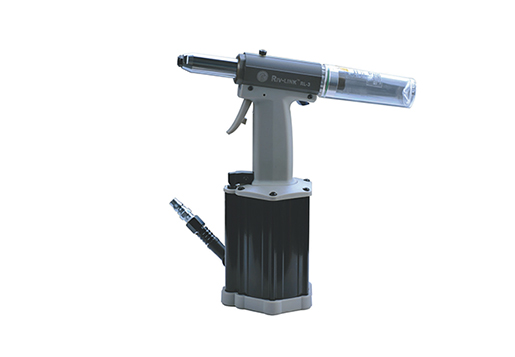
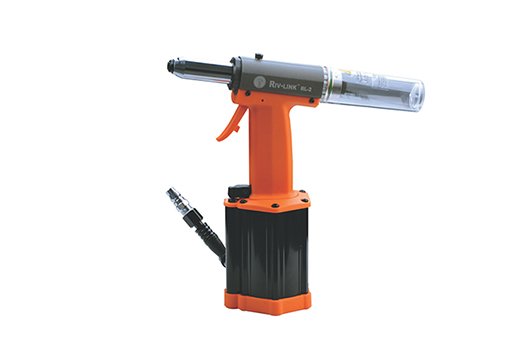
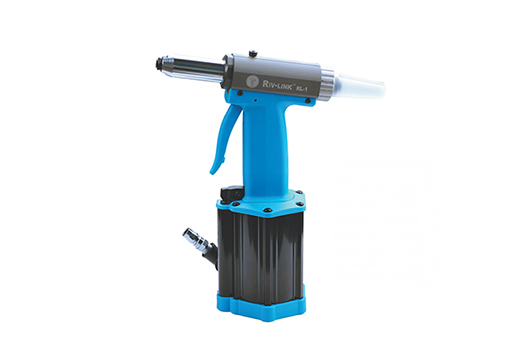
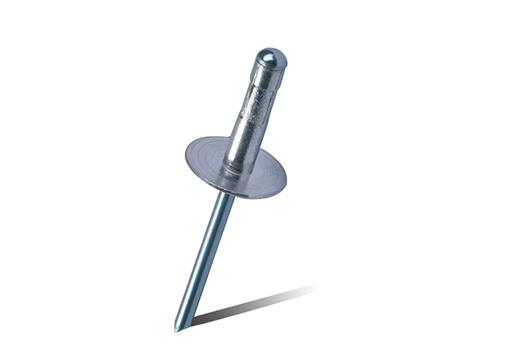
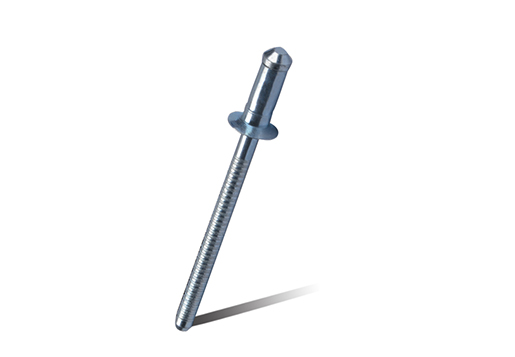
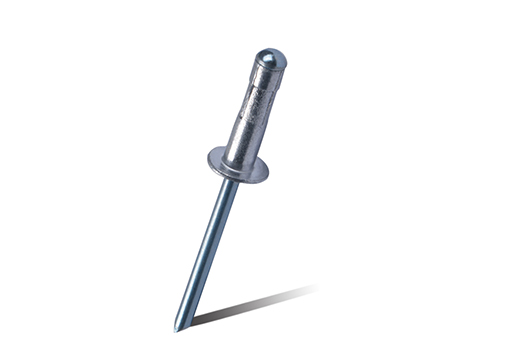
The basic blind rivet, sometimes called a “pop rivet” after a popular brand, consists of two main parts: the rivet body (the sleeve) and a mandrel (a nail-like stem running through the center). The installation process is simple yet ingenious. The rivet body is inserted into a pre-drilled hole, and a special riveting tool pulls the mandrel. As the mandrel is pulled, the rivet body’s tail end is deformed, or “upset,” against the back side of the material, forming a tight, permanent connection. The mandrel then snaps off, leaving the rivet head securely in place.
While standard open-end blind rivets are excellent for providing structural strength, they leave a small hole through the center of the installed rivet body. In applications where moisture, dust, or air leakage must be prevented, this opening can be a critical point of failure. This is where the closed end blind rivet shines, offering a solution that is both structurally sound and completely sealed.
A closed end blind rivet is specifically designed with a cup-shaped end on the blind side, instead of the open hollow tube found on a standard rivet. When the rivet is installed, this cup remains intact, completely sealing the hole.
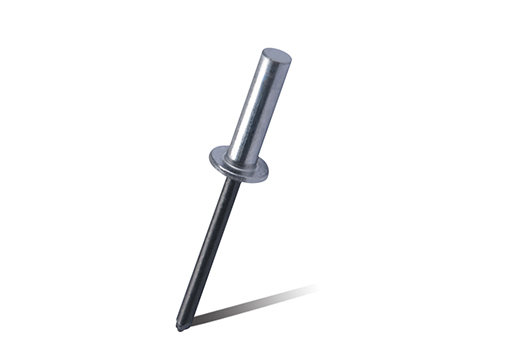
The specialized properties of the closed end blind rivet make it the preferred fastener in several demanding industries:
The evolution from a simple mechanical fastener to a sealing technology demonstrates the continuous ingenuity in engineering. The closed end blind rivet may be small, but it plays a massive role in ensuring the longevity, safety, and performance of products across the industrial spectrum, proving that sometimes, the greatest strength lies in a perfect seal.
Copyright © Steady Industrial Fasteners Co., Ltd. All Rights Reserved China Blind Rivet Nuts Manufacturers Self-Clinching Factory



 EN
EN  English
 русский
 한국어
한국어 عربى
عربى Türk
Türk