We welcome you to contact us, STEADY not only your reliable supplier, but also your turstworthy business partner.
 +(86)-133 8863 9264
Jan 06,2026
Content
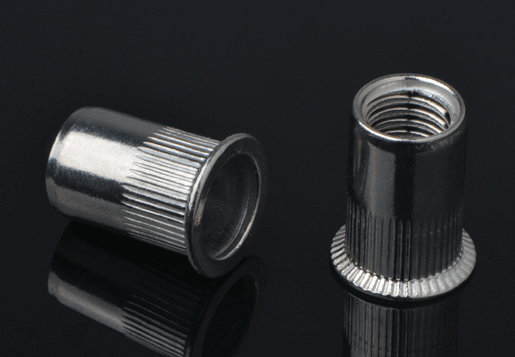
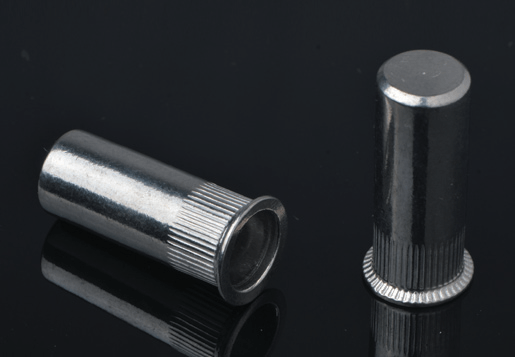
Rivet nuts, commonly referred to as blind nuts or threaded inserts, were originally engineered for thin-walled metal applications where tapping threads is impossible. However, as woodworking projects become more complex—incorporating metal frames, knockdown furniture designs, and mounting hardware—many builders wonder if they can use these fasteners in wood. The short answer is yes, but with specific caveats regarding the density of the wood and the type of rivet nut used. Unlike traditional wood screws that grip the fibers, a rivet nut relies on a mechanical "bulge" or expansion to create a permanent threaded mounting point.
When installed correctly, a rivet nut provides a machine-thread interface that allows for frequent assembly and disassembly without stripping the wood. This makes them ideal for jigs, removable panels, and high-stress joints. However, because wood is significantly more compressible and less ductile than metal, the installation process requires a different approach to prevent splitting the grain or having the insert pull out under load.
For wood applications, the material of the rivet nut plays a crucial role in the longevity of the joint. Steel and stainless steel are the most common, providing high strength and resistance to stripping. Aluminum rivet nuts are softer and easier to "crush" or deform, which can be an advantage in softer woods like pine or cedar where excessive force might crush the internal wood structure too aggressively. If your project will be exposed to moisture, always opt for stainless steel to prevent rust from bleeding into the wood fibers.
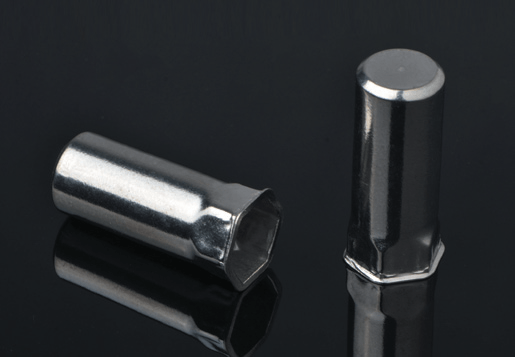
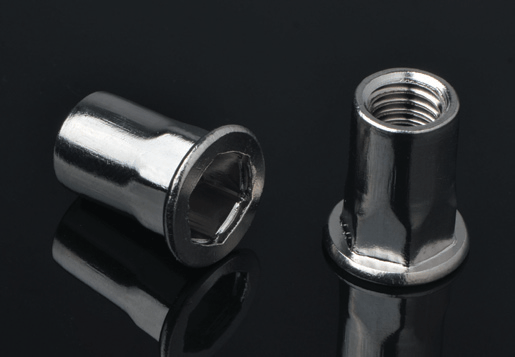
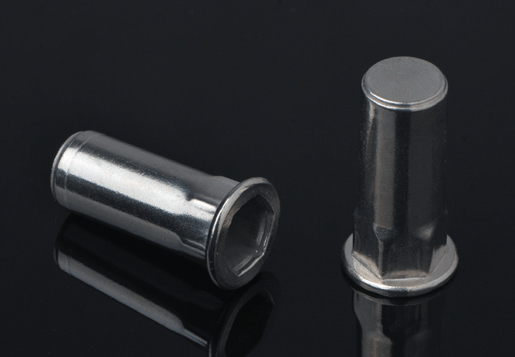
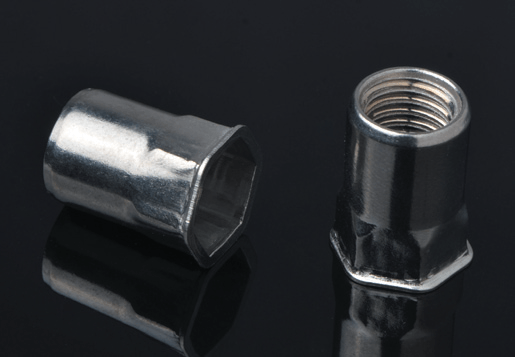
Not all rivet nuts are shaped the same. For wood, the following styles are preferred:
It is important to distinguish between a standard rivet nut and a dedicated wood threaded insert (like a Tee-nut or E-Z LOK). While both provide machine threads, their mechanical retention differs significantly. Below is a comparison of how they perform in various wood types.
| Feature | Standard Rivet Nut | Plusnut / Jack Nut | Threaded Wood Insert |
| Best Wood Type | Hardwoods (Oak, Maple) | Softwoods & Plywood | All Wood Types |
| Retention Method | Expansion/Friction | Folding Legs | External Threads |
| Ease of Install | Requires Rivet Tool | Requires Rivet Tool | Hex Key or Driver |
| Pull-out Strength | Medium | High | Very High |
Successful installation of rivet nuts in wood requires careful preparation to ensure the insert does not spin or pull through the material. Following a disciplined process will yield a professional, durable result.
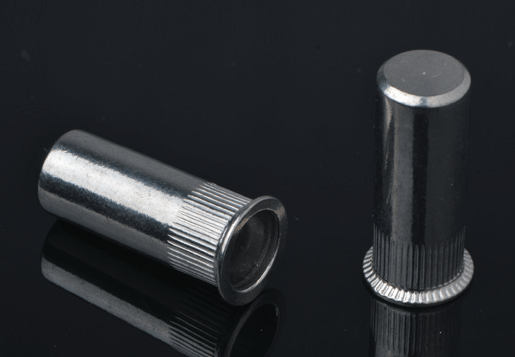
In metal, you usually drill a hole exactly the size of the rivet nut body. In wood, you should drill a hole that is a "press-fit" or slightly smaller than the knurled diameter of the nut. If the hole is too large, the nut will spin during the setting process. If it is too small, you risk splitting the wood when the nut is compressed.
To significantly increase the torque-out resistance (preventing the nut from spinning), apply a small amount of two-part epoxy or cyanoacrylate (super glue) to the outside of the rivet nut before inserting it into the wood. This bonds the metal to the wood fibers, acting as a secondary reinforcement to the mechanical expansion.
When using a rivet nut tool, do not over-compress. In metal, you feel a hard "stop." In wood, the tool will keep crushing the fibers. It is best to use a tool with a stroke-limiter or to tighten by hand until the flange is flush and the resistance increases significantly. For softer woods, "Plusnuts" are highly recommended because their legs expand outward, creating a large surface area that prevents the nut from pulling through the board.
One of the biggest mistakes is using a standard smooth-body rivet nut in end-grain wood. End-grain has very little structural integrity for expansion fasteners and will almost certainly split or fail to hold the nut. Always try to install rivet nuts into the face grain or edge grain of the timber. Additionally, ensure the thickness of your wood board matches the "grip range" of the rivet nut. If the wood is too thick, the nut will expand inside the hole rather than behind the board, which can lead to the nut pulling out easily under tension.
Copyright © Steady Industrial Fasteners Co., Ltd. All Rights Reserved China Blind Rivet Nuts Manufacturers Self-Clinching Factory



 EN
EN  English
 русский
 한국어
한국어 عربى
عربى Türk
Türk