We welcome you to contact us, STEADY not only your reliable supplier, but also your turstworthy business partner.
 +(86)-133 8863 9264
Mar 11,2026
Content
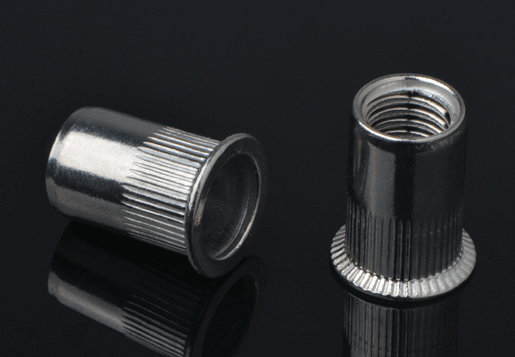
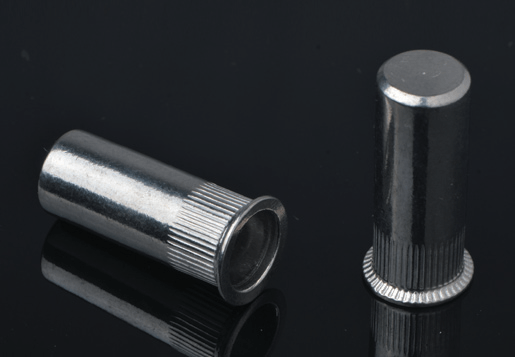
Blind rivet nuts — also called rivnuts, nutserts, or threaded rivet inserts — are fasteners that allow you to create a strong, load-bearing threaded connection in materials where you only have access to one side. Unlike standard nuts and bolts that require access to both faces of a joint, a blind rivet nut is inserted from the front and then mechanically deformed to clamp tight from behind. The result is a flush, permanent threaded hole that can accept a bolt or machine screw repeatedly without stripping.
This one-sided installation capability is what makes blind nut fasteners so valuable in real-world fabrication and repair work. Hollow sections, enclosed panels, thin sheet metal, and composite materials all present the same challenge: you simply can't get a wrench or a hand behind the surface. Rivet nut inserts solve that problem cleanly and professionally, with no welding, no drilling of large clearance holes, and no need for backing plates in most applications.
You'll find them throughout the automotive, aerospace, electronics, furniture, and construction industries. From attaching trim panels in a car to mounting equipment racks in server rooms, threaded rivet nuts are one of the most versatile fastening solutions available today.
Understanding the mechanics behind a rivnut helps you install them correctly and choose the right size. The process starts by drilling a clean hole in your workpiece — the diameter of this hole must match the rivet nut's outer body exactly, so precision matters. The rivet nut is then slipped into the hole from the accessible side, with only a small flange sitting proud of the surface to prevent it from pulling through.
Next, a rivet nut tool (either a hand tool or a pneumatic/electric rivnut setter) engages the threaded mandrel inside the rivet nut and pulls on it while the tool's nosepiece pushes against the flange. This pulling action compresses the barrel of the rivet nut, causing it to fold or bulge outward behind the panel. That bulge — called the "blind head" — clamps against the back face of the material, locking the insert in place. Once set, the tool is released and backed out, leaving you with a fully threaded, permanently installed nut embedded in the panel.
The strength of the joint depends on the material of the rivet nut, the thickness range it's designed for, the diameter of the thread, and how well it's installed. An under-set rivet nut won't grip firmly; an over-set one can crack the material or deform so badly it spins freely. Getting the technique right is straightforward once you know what you're doing.
Blind rivet nuts come in a wider variety of configurations than most people expect. Choosing the right type for your specific application makes a significant difference in holding strength, installation ease, and long-term reliability.
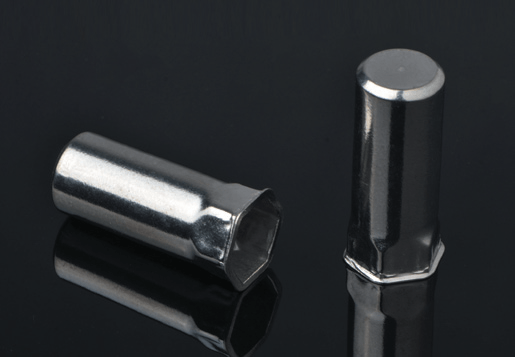
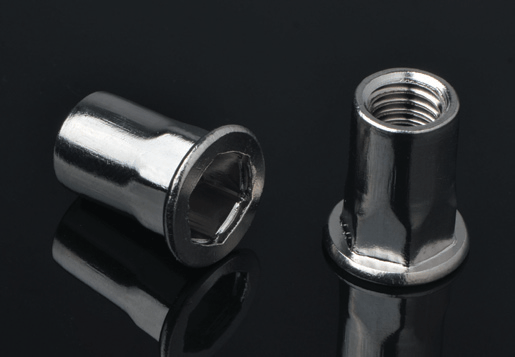
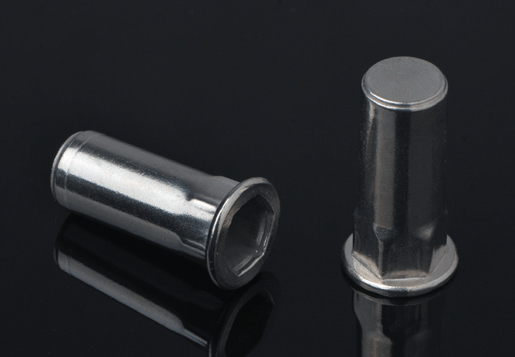
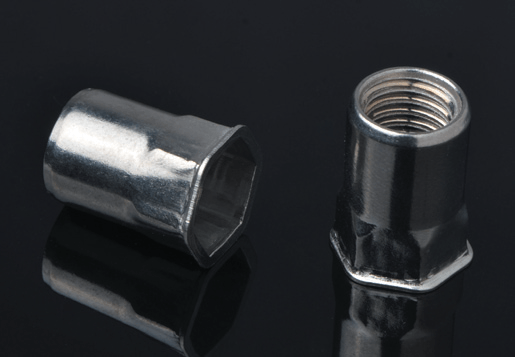
Standard round-body rivet nuts are the most common and the most economical. They're easy to install and work well in most applications. The one limitation is spin-out — if the torque applied to the inserted bolt exceeds the rivet nut's resistance, the whole insert can spin in the hole rather than holding the bolt steady. Hexagonal body rivet nuts address this directly. Their six-sided outer body requires a hex-shaped punched hole rather than a round drilled hole, but once installed, the hex shape physically locks against the material and prevents any rotation, even under very high bolt torque. Use hex body inserts whenever you need to install bolts to high torque values or when spin-out is a real risk.
The flange is the rim that sits on the surface of the material after installation. A standard flat flange is the most common and sits slightly proud of the surface. Large flange designs spread the load over a wider area, making them better for thin or soft materials like plastics and aluminum sheet where a small flange might pull through under load. Countersunk rivet nuts have a tapered flange that sits flush with the surface when installed, which is ideal for applications where a completely flat finish is required — aerospace panels, visible interior trim, or anywhere the flange would interfere with a mating surface.
Open-end rivet nuts are hollow all the way through, which means a bolt of any length can pass through them. They're the standard choice for most applications. Closed-end rivet nuts have a sealed bottom, which serves two purposes: they prevent fluids, gases, and contaminants from passing through the hole, and they allow installation in pressurized systems. Marine, automotive, and food-processing environments often call for closed-end inserts to maintain seals or hygiene standards.
Standard rivet nuts have a minimum grip range — the thinnest material they can clamp effectively. For very thin sheet metal (under 1mm), specialty thin-sheet rivet nut designs are available that form a larger, flatter blind head to distribute the clamping force over a greater surface area. Without this, a standard rivet nut can simply pull through thin material under load.
The material of a rivet nut insert is just as important as its shape. Here's a direct comparison of the three main options:
| Material | Strength | Corrosion Resistance | Weight | Best Use Cases |
| Steel (zinc-plated) | High | Moderate | Heavy | General fabrication, automotive, furniture |
| Aluminum | Moderate | Good | Light | Aerospace, electronics, weight-sensitive builds |
| Stainless Steel (A2/A4) | Very High | Excellent | Heavy | Marine, outdoor, food-grade, chemical environments |
Steel rivet nuts are the go-to for most everyday applications where budget and strength are the priority. Aluminum inserts are preferred when you're working in aluminum panels and want to avoid galvanic corrosion between dissimilar metals — pairing a steel rivet nut with an aluminum panel in a marine environment, for instance, will lead to accelerated corrosion at the contact point. Stainless steel rivet nuts cost more but are the correct choice for any harsh or wet environment where long-term corrosion resistance is non-negotiable.
Blind rivet nuts are available in metric and imperial thread sizes. Metric sizes run from M3 up to M16 for most commercially available inserts, with M4, M5, M6, M8, and M10 being the most commonly stocked. Imperial sizes follow a similar range from #4-40 up to 3/8-16 UNC. Always match the rivet nut thread to the bolt or screw you plan to use — there's no adjustment possible after installation.
The grip range is equally critical. Every rivet nut is rated for a minimum and maximum material thickness it can clamp properly. A rivet nut rated for 0.5mm–3.0mm grip will not set correctly in 5mm plate — the barrel simply won't deform enough to grip. Always check the grip range specification against your actual material thickness before purchasing. If you're working with multiple material thicknesses, you may need different rivet nut sizes for each, even if the thread size stays the same.
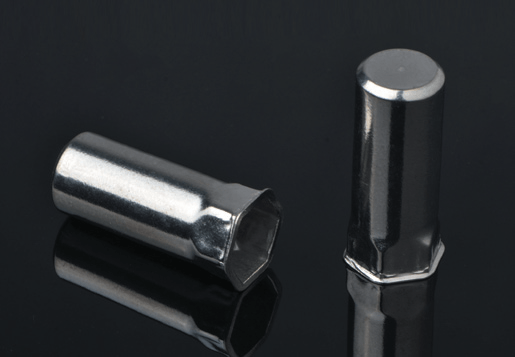
Unlike standard blind rivets, rivet nut inserts require a dedicated installation tool — you cannot install them with a standard pop rivet gun. The tool engages the thread inside the insert and applies a controlled pulling force. There are three main categories of tools:
These are the entry-level option and work well for occasional use or small-volume jobs. A typical manual rivnut tool uses a screw-action or lever-action mechanism to pull the mandrel and set the insert. They're inexpensive (often under $30 for basic models), require no power source, and are portable. The downside is operator fatigue on larger jobs, and manual tools can be inconsistent if the user doesn't apply even, steady force. For hobbyists or low-volume shop use, a good quality manual tool gets the job done fine for M3 through M8 sizes.
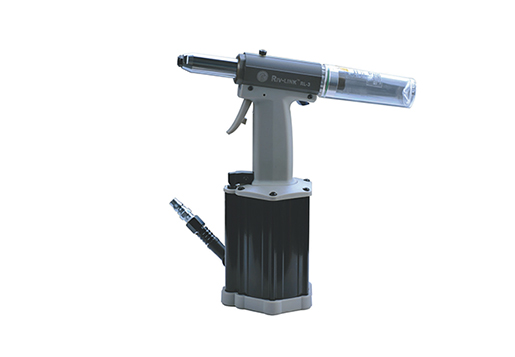
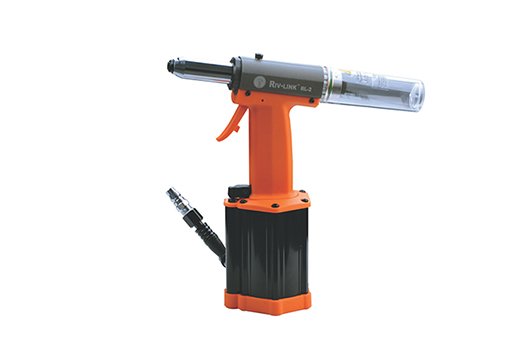
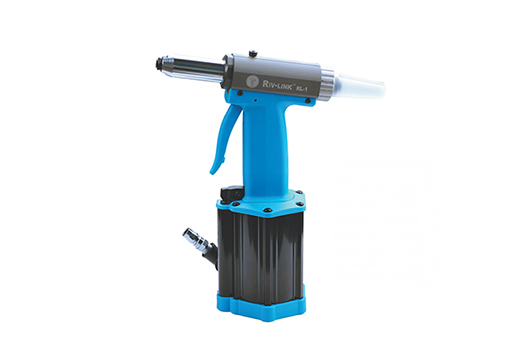
Air-powered rivet nut setters are the professional standard for production work. They set rivet nuts quickly, consistently, and with minimal user effort. Most professional pneumatic tools can handle the full size range from M4 to M12 with interchangeable nosepieces, and they deliver a precise, repeatable stroke that eliminates the under-set/over-set problem that plagues manual installation. Hydraulic tools go even further and are used for very large diameter inserts (M10, M12, M16) where the setting force required exceeds what pneumatic tools can reliably produce.
Battery-powered electric rivnut tools offer a compelling middle ground between manual and pneumatic options. They're portable like a manual tool but fast and consistent like a pneumatic one. Many models accept standard drill battery platforms (18V systems from major brands), making them a convenient addition to an existing cordless tool collection. They're ideal for field work, vehicle builds, and any situation where a compressor isn't practical.
Installing rivet nut inserts correctly is straightforward once you understand each step. Rushing or skipping steps leads to poor installation that can fail under load.
Even experienced fabricators make these errors. Knowing them in advance will save you from having to drill out a poorly set insert — which is not a fun job.
The range of applications for rivnuts is genuinely broad. Here are some of the most common uses across different industries to give you a sense of where these fasteners show up in practice:
Rivet nut quality varies significantly between suppliers. Budget inserts from unverified sources often have inconsistent dimensions, soft threads that strip easily, or thin barrel walls that crack during installation rather than forming a clean blind head. For professional or safety-critical work, buying from established fastener suppliers with documented material certifications is worth the small premium.
For general use, look for inserts that specify the material grade (e.g., A2 stainless, 5052 aluminum, carbon steel with zinc plating), list the actual grip range in millimeters, and include the required hole diameter. Reputable brands like Bollhoff (Rivkle), Stanley Engineered Fastening (Avdel), Gesipa, and Wurth are widely used in professional settings and are available through industrial fastener distributors. For smaller quantities, Amazon, McMaster-Carr, and Bolt Depot carry a good selection of metric and imperial rivet nut inserts with clear specifications listed.
When purchasing in bulk, consider buying assortment kits that include multiple sizes in one package — these are particularly useful for workshops that handle varied projects, as you'll have the right size on hand without needing to reorder before every job.
Copyright © Steady Industrial Fasteners Co., Ltd. All Rights Reserved China Blind Rivet Nuts Manufacturers Self-Clinching Factory



 EN
EN  English
 русский
 한국어
한국어 عربى
عربى Türk
Türk